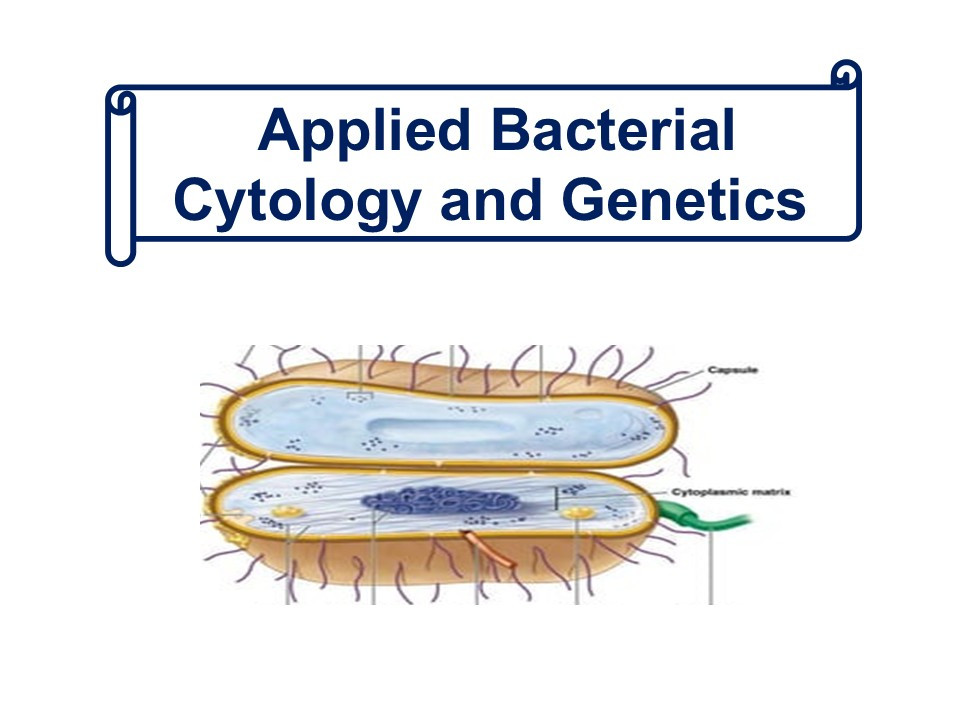
Applied Bacterial Cytology and Genetics as a Value-Based Course is designed to integrate scientific knowledge with ethical awareness, social responsibility, and sustainable applications in microbiology. The course provides foundational understanding of bacterial cell structure, organization, and genetic mechanisms while emphasizing their relevance to human health, environmental sustainability, and biotechnology.
Students will explore bacterial cytology including cell wall structure, membranes, nucleoid, plasmids, spores, and staining techniques, alongside core genetic processes such as replication, transcription, translation, mutation, gene regulation, and genetic recombination. The course highlights responsible use of microbial genetics in areas such as antibiotic resistance management, disease control, biofertilizer development, bioremediation, and industrial production.
Special focus is given to ethical issues in genetic manipulation, biosafety, biosecurity, antimicrobial stewardship, and the societal impact of microbial biotechnology. Through case studies and applied examples, students will develop scientific temper, environmental consciousness, professional ethics, and decision-making skills.
By the end of the course, learners will not only understand bacterial cytology and genetics but also appreciate their role in promoting public health, sustainable agriculture, environmental protection, and responsible scientific innovation.
- Teacher: Sofi Javed Hussain
|
|
|
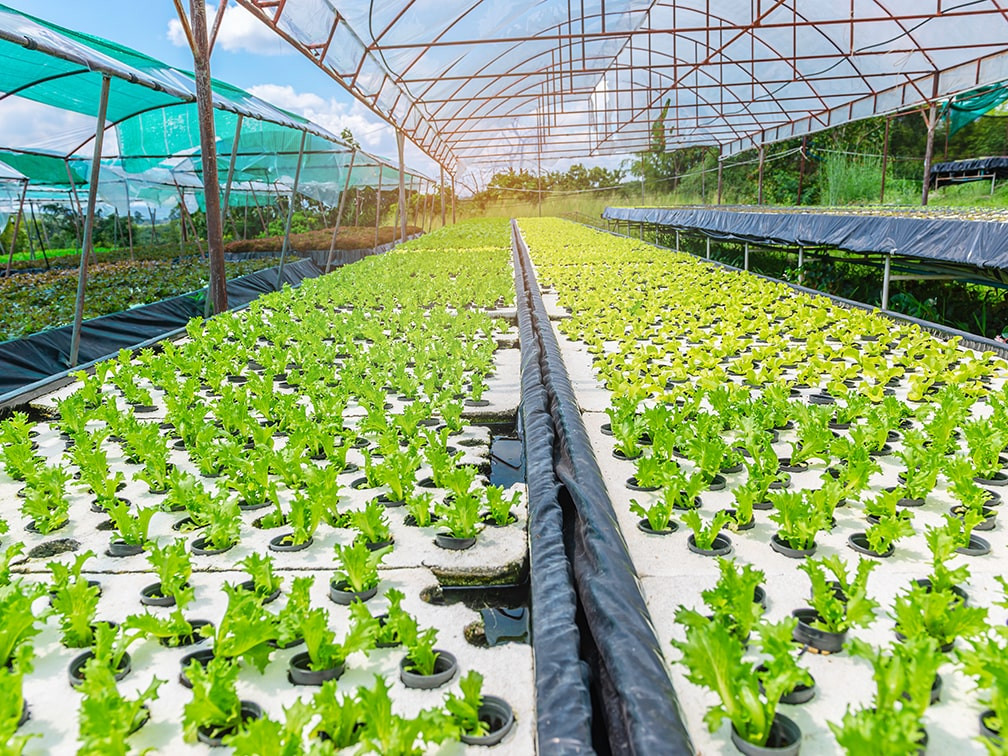
Hydroponics provides students with a focused introduction to the world of hydroponic systems, environmental stewardship, and community engagement. Students will gain hands-on experience in planting, maintaining, and harvesting crops using hydroponic methods. Through this course, students will build an understanding of sustainable practices, food systems, and the importance of working together to create positive change in their community. |
|
Course Objectives: |
|
ü The objective of the course is to provide hands-on experience on various aspects of hydroponics ü To make students self-reliant and employable by providing the necessary knowledge and experience to establish hydroponic system.
|
|
Course Outcomes: |
|
After completing the course, learners will be able to: ü Develop basic hydroponics facilities at any given location (pilot scale and/or industrial scale). ü Understand the basic principles of plant growth and hydroponic systems. ü Devise and implement a strategy for marketing of the product. ü Apply the knowledge to fulfill certification rules and various government policies. ü Establish themselves as entrepreneurs (Hydroponic cultivator).
|

- Teacher: Rafiq Ahmad Lone
This course has been developed by (Prof Rohini Sreevathsa Senior Scientist,NRCPB, IARI, Pusa, New Delhi).The Pi of this subject is (Prof.Sujata Bhargava Professor, Department of Botany, University of Pune)and team members/contenr writers are (Rhitu Rai, (.) || Sujata Bhargava, (.) || Nagaveni V|| Rohini Sreevathsa, (NRCPB, IARI, Pusa, New Delhi -12) || Rama Prashat G|| Vitthal T. Barvkar, (Department of Botany, S. P. Pune University, Pune) || Rama Prashat G|| Basavaprabhu L. Patil|| Vinutha T|| Subodh Kumar Sinha, (.) || Basavaprabhu L. Patil|| Vinutha T|| Dr Rohini Sreevathsa, (.) || Rhitu Rai, (.)).This course is being offered/adopted by this university
This course has been developed by (Prof Krishnayya S. R. NadimintiAssociate Professor,M. S. University of Baroda).The Pi of this subject is
(Prof.Sujata Bhargava Professor, Department of Botany, University of Pune)and team members/contenr
writers are (Swati Diwakar|| N.S.R. Krishnayya|| N.S.R. Krishnayya|| Swati
Diwaker, (.) || Nandita Ghoshal, (.) || Deepa Gavali, (Gujarat Ecological
Society, Vadodara) || N.S.R. Krishnayya|| Neha Goyal, (Delhi University) ||
Neeta Rakesh Pandya, (The Maharaja Sayajirao University of Baroda) || Nandita
Ghoshal, (.) || Gyan Prakash Sharma, (University of Delhi) || Hariom Verma, (.)
|| KS Rao|| Gyan Prakash Sharma, (.) || Gyan Prakash Sharma, (.) || Hariom
Verma, (.)).This course is being offered/adopted by this university
This course has been developed by (Prof Nutan padmanabha Malpathak Professor,Deparment of Botany, University of Pune).The Pi of this subject is
(Prof.Sujata Bhargava Professor, Department of Botany, University of Pune)and team members/contenr
writers are (Vidya Patil-Patankar, (.) || Renuka Shirish Diwan, (Deparment of
Botany, University of Pune) || Gauri Abhyankar, (.) || Nutan Malpathak, (.) ||
Dr Prashant Duraphe|| Pradnya Kedari|| Gauri Anil Abhyankar, (Dept. of
Biotechnology, A.G. College, Pune) || Pradnya Kedari|| Gauri Anil Abhyankar,
(Dept. of Biotechnology, A.G. College, Pune) || Dr Vaijayanti Tamhane|| Pradnya
Kedari|| Amrita Srivastav, (.)).This course is being offered/adopted by this
university
This course has been developed by (Dr Sujata Bhargava).The Pi of this
subject is (Prof.Sujata Bhargava
Professor, Department of Botany, University of Pune)and team members/contenr
writers are (Nidhi Bharti, (Savitribai Phule Pune University) || Vineeta Jagtap
|| Dhiraj Naik || Hemlata Kotkar, (Department of Botany, Savitribai Phule Pune
University) || Sirsha Mitra|| Varsha Vartak, (.) || Amrita Srivastav, (.) ||
Sujata Bhargava, (.)).This course is being offered/adopted by this university