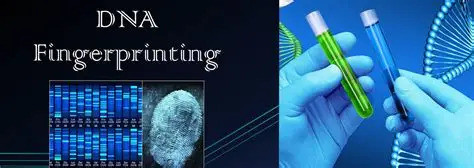
DNA fingerprinting, also known as DNA profiling, is a core technique in forensic science used to identify individuals based on variations in their DNA. It relies primarily on Short Tandem Repeats (STRs)—highly polymorphic, non-coding regions of the genome that differ greatly among individuals. Because STRs are short and abundant, they are well suited for analysis of degraded forensic samples.
The standard forensic DNA workflow includes biological sample collection (blood, saliva, semen, hair roots, or touch DNA), DNA extraction, quantification, PCR amplification of STR loci, and separation by capillary electrophoresis. The resulting STR profile is visualized as an electropherogram, where allele sizes at multiple loci form a unique genetic pattern for an individual.
Forensic interpretation involves statistical evaluation using population genetics principles, such as Hardy–Weinberg equilibrium, to calculate parameters like random match probability and likelihood ratios. These statistics convey the strength of DNA evidence in legal contexts.
Beyond criminal investigations, DNA fingerprinting is widely applied in paternity and kinship testing, disaster victim identification, and missing-person cases. Databases such as CODIS facilitate profile comparison while raising ethical considerations related to privacy and data protection.
- Teacher: Saif Niaz Lone