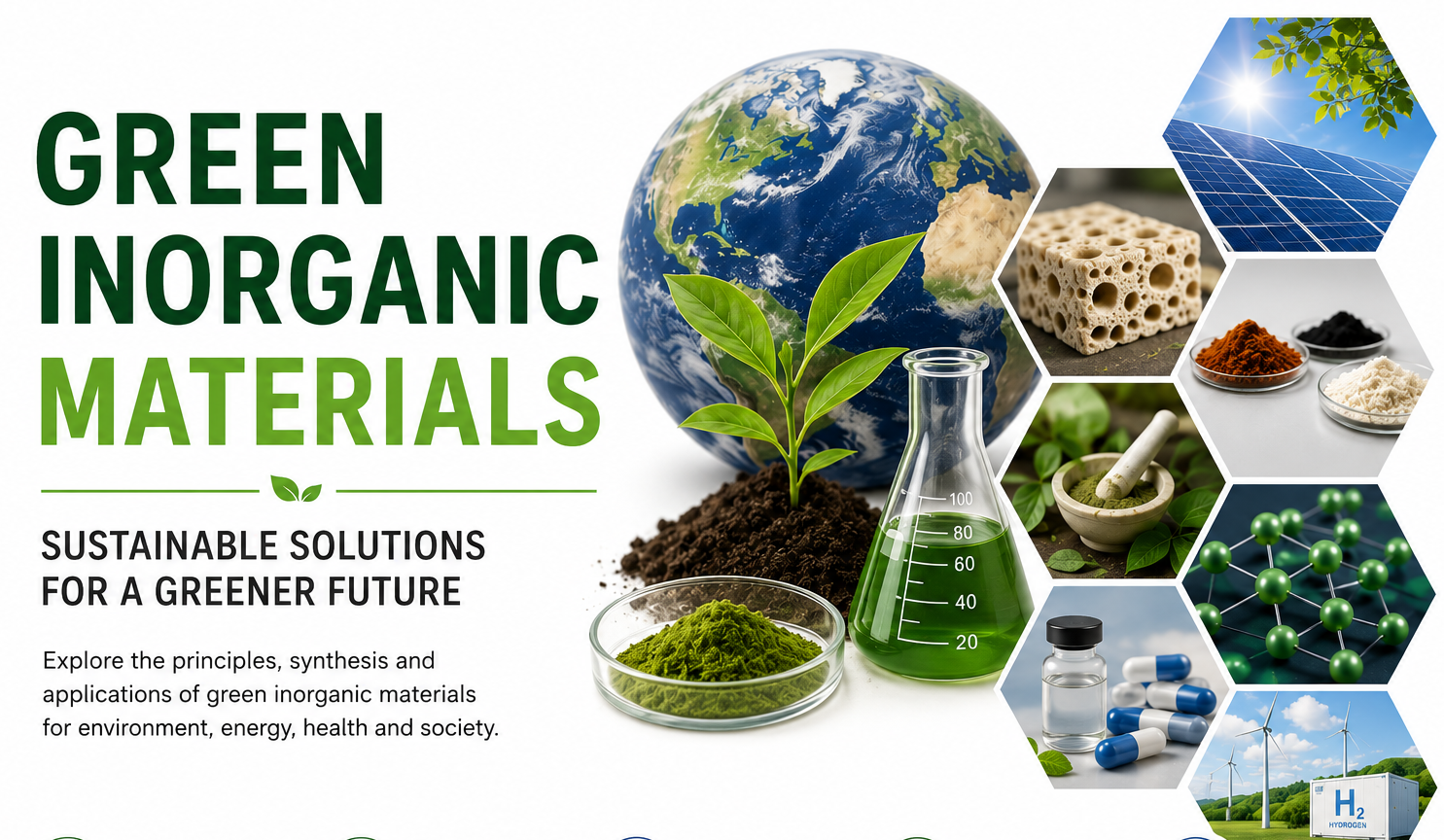
This course provides a comprehensive introduction to Green Chemistry and Green Inorganic Materials, designed to help students understand how we can create more sustainable materials for the future. Aligned with the UGC Swayam protocol, the curriculum is divided into two main units that bridge the gap between traditional chemistry and modern sustainable practices. The first unit lays the foundation for sustainable science by exploring the core objectives and scope of green chemistry, as well as the 12 Principles applied to inorganic and materials chemistry. It further emphasizes the selection of eco-friendly raw materials—such as earth-abundant elements, industrial wastes, and natural minerals—and highlights how traditional Indian knowledge systems historically utilized green inorganic materials for construction, medicine, and water purification. Additionally, students will learn to compare traditional high-energy manufacturing with modern "green" synthesis techniques, like microwave and sol–gel processes, which prioritize energy efficiency and waste reduction.
The second unit focuses on the practical application of these concepts, covering the low-temperature processing of green ceramics and bio-ceramics for healthcare, and the role of inorganic catalysts in pollution control and industrial efficiency. The course also explores the synthesis of inorganic nanomedicines via plants and microbes, the critical function of these materials in sustainable energy solutions like solar and hydrogen power, and the use of Life Cycle Assessment (LCA) to evaluate the environmental impact of materials from creation to disposal. By the end of this course, students will be able to apply the principles of green chemistry to evaluate the sustainability of various materials and understand their vital role in addressing global environmental and health challenges.
- Teacher: Ambreen Mushtaq